
Sri Guru Singh Sabha Southall Proposes Major Constitutional Reforms, Mandatory Alcohol Testing for Gurdwara Leaders
- Internationl
- (Asia/Kolkata)
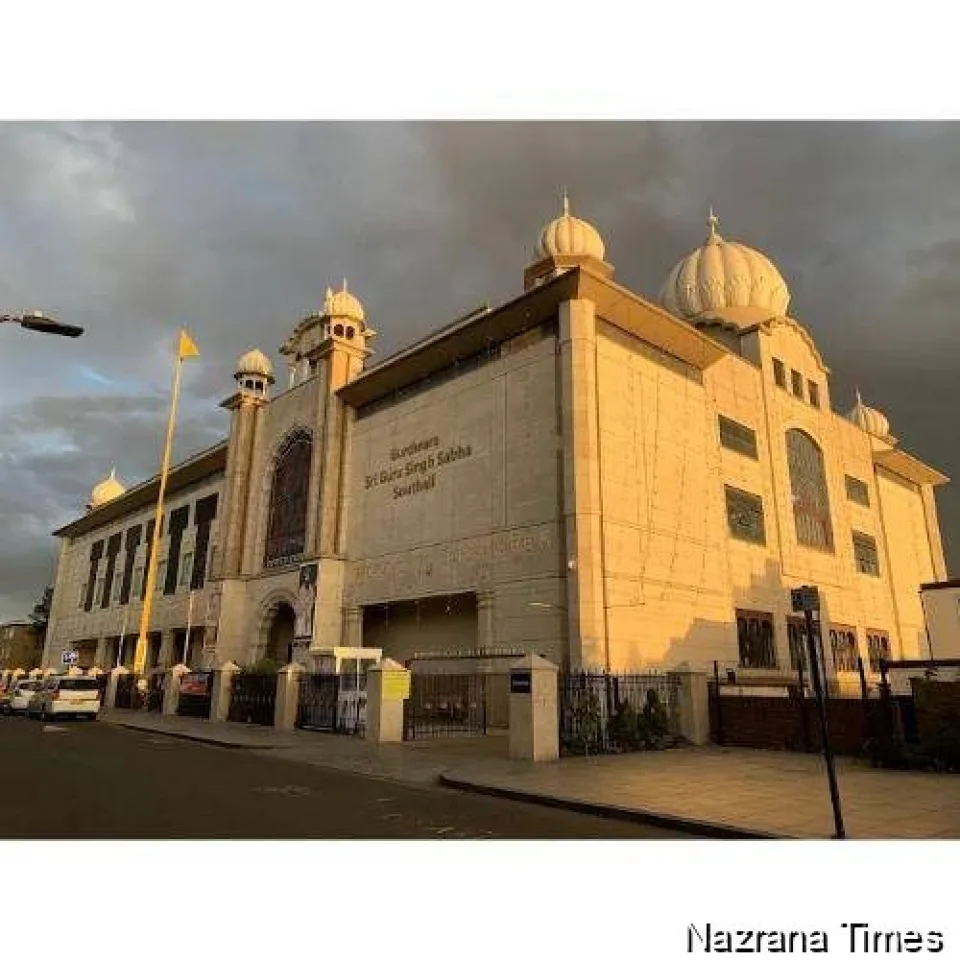
NAZRANA TIMES | UK SIKH COMMUNITY NEWS
14 proposed reforms aim to prevent nepotism, strengthen democratic accountability, ensure financial transparency and protect Sabha assets
SOUTHALL, UNITED KINGDOM | October 2026 | Nazrana Times
Sri Guru Singh Sabha Southall, one of the United Kingdom’s prominent Sikh religious institutions, has unveiled a comprehensive proposal for constitutional reforms aimed at strengthening religious leadership, democratic accountability, financial transparency and the protection of Gurdwara assets.
In an official statement issued in October 2026, the Executive Committee outlined 14 major proposed amendments designed to modernise the Sabha’s governance while remaining firmly rooted in Sikh religious principles and teachings.
The Committee stated that its objective is to establish a legally sound constitutional framework that will serve future generations and potentially provide a model of good governance for Gurdwaras and Sikh institutions worldwide.
The proposals address several significant areas, including conflicts of interest, alcohol-free leadership, membership eligibility, independent elections, collective decision-making, trustee responsibilities and safeguards against unauthorised property transactions.
Mandatory Alcohol Testing Proposed for Executive Committee and Trustees
One of the most significant proposed reforms introduces a strict prohibition on alcohol consumption for all members of the Executive Committee and Board of Trustees.
Under the proposed rules, every candidate seeking election or appointment to either body would be required to submit a satisfactory fingernail Ethyl Glucuronide (EtG) alcohol test report from an approved laboratory.
Candidates who refuse testing or receive a confirmed positive result would be declared ineligible, subject to the prescribed review procedure.
The proposals also require appropriate Disclosure and Barring Service (DBS) checks and other lawful eligibility assessments.
According to the Executive Committee, these measures are intended to uphold Sikh religious principles and establish higher standards of personal conduct among those entrusted with the management of the institution.
Measures to Prevent Nepotism and Conflicts of Interest
The proposed constitutional amendments seek to prevent closely related individuals from serving simultaneously on the same Executive Committee, Board of Trustees or Membership and Election Committee.
The reforms would introduce a clearer definition of closely related persons to reduce the risk of family influence and conflicts of interest within the institution.
Individuals who were employed by the Sabha or personally benefited financially from supplying goods or services to it during the preceding 12 months would also be ineligible to serve on the Executive Committee or Board of Trustees.
This restriction would extend to individuals holding a material financial interest in such commercial arrangements.
Seven-Member Core Group to Strengthen Collective Leadership
The Executive Committee has proposed establishing a seven-member Core Group to promote collective responsibility and reduce dependence on individual office-bearers.
The proposed group would comprise:
* One President
* Two Vice-Presidents
* Two General Secretaries
* Two Treasurers
Decisions falling within the group’s delegated authority would require approval from at least four members.
The reforms would also divide responsibilities between the General Secretary (Operations) and the General Secretary (Finance, Legal, HR and Development).
The proposed arrangement is intended to strengthen administrative controls and ensure that major decisions are made collectively.
Recognition of Sri Akal Takht Sahib and the Principle of Miri-Piri
The constitutional proposals reaffirm the Sikh principle of Miri-Piri established by Sri Guru Hargobind Sahib Ji.
The Sabha proposes that Hukamnamas, Gurmattas and other directions issued by Sri Akal Takht Sahib Ji should be respected and followed in accordance with the Sabha’s religious and charitable objectives and applicable law.
The Executive Committee has emphasised that the proposed constitution must remain firmly grounded in Sikh teachings while meeting the legal requirements governing charitable institutions in the United Kingdom.
Membership Expansion and Revised Fee Structure
Another significant proposal seeks to expand membership eligibility by widening the geographical areas covered and allowing additional categories of UK residents to join the Sabha.
Under the proposed arrangements, membership would be available to eligible British citizens, individuals holding Indefinite Leave to Remain in the United Kingdom and people holding a UK visa originally granted for at least 30 months.
Individuals present solely on visitor visas would not qualify.
All applicants would still be required to satisfy the prescribed residence, identity and other constitutional requirements.
The proposed membership structure includes three years of free Ordinary Membership, Life Membership for £25 and free Life Membership for eligible individuals aged 65 or above.
Additional provisions would protect membership continuity following a change of residence.
Nine-Member Board of Trustees and Independent Elections
The Executive Committee has confirmed its intention to retain the existing trustee model while proposing a nine-member Board of Trustees.
Under the reforms, trustee candidates would need at least six years of continuous Sabha membership, appropriate eligibility checks and the support of 50 Sabha members.
Eight additional Trustees would be elected through a secret ballot at an Extraordinary General Meeting (EGM) for six-year terms.
The proposals also establish clearer procedures for the appointment, responsibilities and removal of Trustees.
To improve electoral fairness, a seven-member Membership and Election Committee would be formed with nominations from the Executive Committee, the largest opposition group and the Board of Trustees.
The proposed framework also provides for elections by consensus.
Stronger Financial Controls and Protection of Gurdwara Property
The constitutional amendments propose tighter financial oversight and additional safeguards against unauthorised expenditure.
Urgent expenditure of up to £10,000 would require joint approval from at least four authorised Core Group members.
Unbudgeted expenditure exceeding £10,000 would require Executive Committee approval.
The proposed reforms also introduce stricter rules governing the sale, lease or other transfer of Sabha property.
Specified property transactions would require approval by a two-thirds majority of the Executive Committee and a separate two-thirds majority of members voting by secret ballot at an Extraordinary General Meeting.
These measures are intended to protect the institution’s assets and ensure that major property decisions cannot be taken without substantial democratic approval.
Executive Committee Condemns Registration of Separate Company
In a particularly significant section of its official statement, the Executive Committee strongly condemned what it described as the unauthorised registration of a separate company under the name Sri Guru Singh Sabha Southall.
According to the Committee, the company was registered without its authority or approval.
The statement maintains that the company has no authorisation from the Executive Committee to represent the Sabha or conduct transactions involving its assets.
The Committee said it was taking appropriate legal and regulatory steps to protect the institution’s name and interests.
It further clarified that the matter is entirely separate from the proposed constitutional reforms and must be resolved independently.
The Executive Committee categorically confirmed that the existing trustee model would be retained.
It also stated that there was no proposal to incorporate Sri Guru Singh Sabha Southall or establish a company to own, hold or manage the Sabha’s properties.
The allegations concerning the separate company are presented as the Executive Committee’s position in its official statement.
Proposed Responsibilities Concerning Khalsa Primary School
The reforms also address governance responsibilities relating to Khalsa Primary School Southall.
Under the proposed arrangements, the Board of Trustees would be assigned specified responsibilities concerning the selection, appointment and removal of the school’s Foundation Governors.
These responsibilities would remain subject to the school’s Instrument of Government and applicable law.
Reforms Subject to Constitutional and Legal Approval
The Executive Committee has made clear that the proposed amendments have not yet become binding constitutional provisions.
Their implementation remains subject to approval procedures under the Sabha’s existing governing document, applicable legislation and any necessary authorisation from the Charity Commission.
The Committee welcomed constructive cooperation between the two principal groups within the Sabha in advancing the reforms.
It also appealed to members and the wider Sadh Sangat to support the initiative in a spirit of unity and Chardi Kala.
The proposed reforms represent a potentially significant development in the governance of Sikh religious institutions in the United Kingdom.
If approved and implemented, the amendments could establish more stringent standards for religious leadership, financial accountability, democratic participation and institutional asset protection.
However, their ultimate impact will depend on the final constitutional wording, the required approvals and their practical implementation.
The Executive Committee has expressed its ambition to make Sri Guru Singh Sabha Southall a model of excellence in Sikh institutional governance.
Source: Official Statement by the Executive Committee, Sri Guru Singh Sabha Southall, October 2026. The report is based on the four-page statement provided to Nazrana Times. The proposals and the Committee’s allegations have not been independently verified.


Leave a Reply