The Three Forgotten Samādhis: A Hidden Chapter of Lahore’s Sikh Royal Legacy
24 Dec, 2025 11:15 PM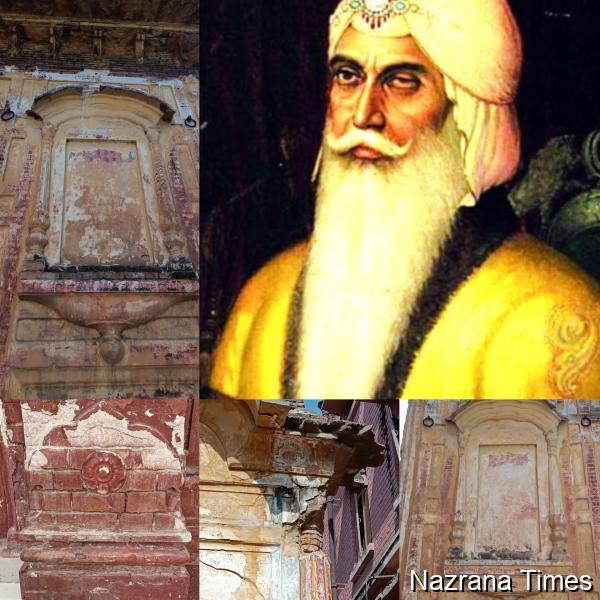
The Three Forgotten Samādhis: A Hidden Chapter of Lahore’s Sikh Royal Legacy
Ali Imran Chattha LAHORE
Pictures subhan Nadeem khan
With particular gratitude to Professor Dr Kashif Faraz, Government Islamia College, Civil Lines, Lahore
Within the sweeping lawns of the Government Islamia College, Civil Lines opposite the SSP Office and adjoining the Lahore District Courts, close to the historic ṭibbā associated with Shāh Farīd (Bābā Farīd Ganj Shakar) — stand three weathered samādhis. These memorial shrines, housing the ashes of royal women from the twilight of the Sikh Empire, rank among Lahore’s most overlooked yet historically poignant heritage sites.
Erected upon a substantial square platform some ten feet in height, the three domed structures date to the reign of Mahārājā Ranjīt Singh and were once integral to a royal garden known as Shāhī Bāgh. Today, they persist in quietude within a bustling college campus, silent witnesses to courtly intrigue, dynastic tragedy and the internal decay that precipitated the fall of the Sikh Empire in 1849.

A Site of Layered Histories
The location itself is a living palimpsest of Lahore’s multi-religious and multi-era past. Originally a Mughal-era garden, it was adapted during Sikh rule into a cremation and memorial ground for royal women, while male members of the dynasty were commemorated elsewhere, most notably near Lahore Fort.
Following British annexation, the area underwent further transformation. District courts were established, and in June 1886 the Ārya Samāj founded the Dayānand Anglo-Vedic College upon the site. After Partition in 1947, that institution relocated to Ambāla, India, and the premises were transferred to the Anjuman-e-Himāyat-e-Islām, becoming the Government Islāmia College, Civil Lines — an institution deeply interwoven with Pakistan’s educational and independence history.
Throughout these successive changes, the samādhis remained embedded within the campus. They have even been adapted for practical use on occasion, including as a dispensary, which has contributed to their physical wear. The college nevertheless continues to acknowledge their historical significance through guided visits and awareness initiatives.

The Three Royal Women Commemorted
Mahārānī Datār Kaur (Māī Nakāīn / Rāj Kaur Nakāī)
The largest and most prominent of the three samādhis belongs to Mahārānī Datār Kaur, affectionately known as Māī Nakāīn. Constructed on a square base measuring approximately sixteen feet per side, it features doors on all four aspects and is surmounted by a fluted dome.
Daughter of Sardār Ran Singh of the Nakāī Misl, she married Mahārājā Ranjīt Singh around 1797–1798 and rose to become his most trusted and respected wife, notwithstanding the Mahārājā’s polygamous court. Politically astute and administratively capable, she advised actively on affairs of state, accompanied her son Kharak Singh during the 1818 Multān campaign, and administered her jāgīr at Sheikhupura Fort. She was also a patron of Punjabi arts, particularly phulkārī embroidery.
Māī Nakāīn died on 20 June 1838 following an illness contracted after a hunting expedition. Profoundly affected, Mahārājā Ranjīt Singh personally selected the site, oversaw the construction of her samādhi, and is said to have wept openly — a rare display of emotion that underscored her singular importance. Her memorial established this ground as the resting place for royal women.

Mahārānī Chand Kaur
The second principal samādhi commemorates Mahārānī Chand Kaur, wife of Mahārājā Kharak Singh and mother of Prince Nau Nihāl Singh. Married in 1812 at the age of ten, she was thrust into the centre of power following the deaths of both her husband — widely believed poisoned in 1840 — and her son, who perished the same year in a mysterious accident when a gate collapsed at Hazūrī Bāgh.
Chand Kaur ruled briefly as regent under the title Malika Muqaddasa (“Holy Queen”), asserting that her daughter-in-law was pregnant with a potential heir. Her regency endured approximately two and a half months before she was overthrown by rival claimants and powerful Dogra ministers, notably Dhīān Singh. Thereafter confined, she was assassinated on 11 June 1842, reportedly on the orders of Sher Singh and Dhīān Singh. Her ashes were interred beside those of her mother-in-law.
Rānī Sāhib Kaur (also known as Gulāb Kaur)
The smallest of the three samādhis belongs to Rānī Sāhib Kaur, widow of Prince Nau Nihāl Singh. Married in 1837, she was with child at the time of her husband’s death. She later gave birth to a stillborn son, Jawāhar Singh, extinguishing the direct royal line.
Historical accounts suggest foul play, including allegations that abortifacients were administered to forestall the emergence of an heir. She died in mysterious circumstances in 1841. The modest scale of her octagonal samādhi reflects her brief and tragic presence within the royal narrative.

Intrigue, Violence and the Fall of an Empire
Collectively, these samādhis encapsulate the Sikh Empire’s final, turbulent decade — a period riven by assassination, betrayal and relentless power struggles. The murder of Chand Kaur precipitated further violence, including the killing of Dhīān Singh in 1843 by Ajīt Singh Sandhānwāliā, followed swiftly by vengeance exacted by Dhīān Singh’s son, Hīrā Singh. Such cycles of bloodshed fatally enfeebled the state, paving the way for British annexation shortly thereafter.
As of 2025, the samādhis remain within the grounds of Government Islāmia College. Though bearing marks of age and past indifference, they endure as rare physical testaments to Lahore’s layered civilisational history — Mughal, Sikh, British, Hindu and Islamic — coexisting within a single space.
Access requires permission from college authorities, yet for those who visit, the experience is one of profound reflection. These “forgotten” samādhis remind us that history does not always reside in grand monuments; at times, it lingers in quiet, overlooked corners, awaiting recollection.
Posted By: TAJEEMNOOR KAUR