
Pakistan's Lead Mediator Heads to Iranian Capital as Talks Near Critical Threshold
- Internationl
- (Asia/Kolkata)
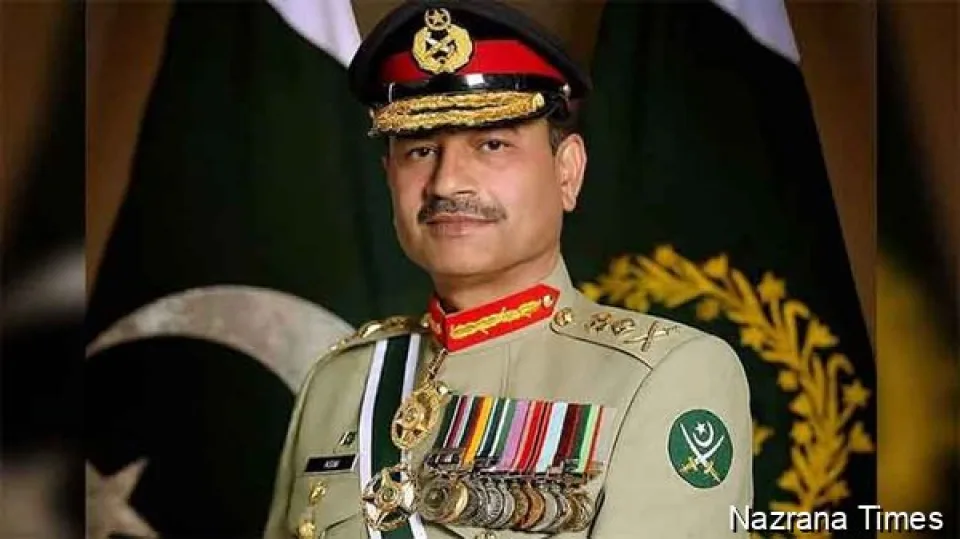
Field Marshal Syed Asim Munir Departs for Tehran in High-Stakes Push to Seal US–Iran Peace Deal
ISLAMABAD / TEHRAN Friday, 22 May 2026
Ali Imran Chattha
Field Marshal Syed Asim Munir, Chief of Defence Forces and Chief of Army Staff, departed for Tehran on Friday as part of an intensive last-mile diplomatic drive to broker a foundational agreement between the United States and Iran marking what observers are calling the most consequential leg of Pakistan's months-long mediation mission.
Pakistan's top military commander is travelling to the Iranian capital in an effort to finalise a deal under which Washington and Tehran would agree to end the war and launch negotiations for a broader agreement. His direct engagement in Tehran, following several days of lower-level contacts, is being interpreted as a decisive final push by Islamabad to crystallise an accord. The mediating parties are working toward a letter of intent encompassing a ceasefire framework alongside principles governing a subsequent 30-day negotiating window one that would also address Iran's nuclear programme.
A Delicate Diplomatic Moment
Tehran has confirmed it is reviewing the latest responses from Washington to its proposal to end the nearly three-month US–Israel war on Iran, as Pakistan steps up efforts to achieve progress in talks that US President Donald Trump has warned are on the "borderline" between a deal and renewed military strikes. Trump cautioned this week that if the right answers are not forthcoming, the situation could escalate rapidly, while simultaneously indicating willingness to allow a few additional days for Tehran to respond. US Secretary of State Marco Rubio acknowledged slight progress in the negotiations, though he was careful not to overstate the advance.
Trip Preceded by Intensive Shuttle Diplomacy
Field Marshal Munir's Tehran journey was preceded by sustained groundwork at the ministerial level. Interior Minister Mohsin Naqvi travelled to Iran twice within a single week, carrying messages between the two sides and working to streamline communication and accelerate the pace of negotiations. Officials involved in the process have acknowledged that while messaging between both capitals is active, ensuring that responses are relayed with sufficient speed remains a working challenge particularly given signals of impatience from Washington.
Analysts have noted that the nuclear file remains a sticking point. The United States insists that the nuclear question be brought into the current phase of negotiations, while Iran maintains that discussions on the nuclear issue are conditional upon a 30-day confidence-building process involving the formal ending of the war and the lifting of the naval blockade. On the Strait of Hormuz, the two sides remain at odds, with Washington unwilling to accept Tehran's position on toll collection through the waterway.
Broader Multilateral Framework
Pakistan, Qatar, Saudi Arabia, Egypt and Turkey have all been involved in the mediation effort. Islamabad's unique positioning maintaining longstanding ties with Tehran while having cultivated a personal rapport between Prime Minister Shehbaz Sharif, Field Marshal Munir and the Trump administration has rendered it the indispensable linchpin of this diplomatic architecture.
Reports indicate that a further round of talks is expected to be held in Islamabad after the Hajj season, signalling that Pakistan could emerge as a recurring venue for follow-up discussions on implementation and next steps once a foundational framework is agreed.
Pakistan's Mediation Role in Context
Field Marshal Munir's latest visit is part of a pattern of direct personal engagement with Iranian leadership stretching back several months. During an earlier visit to Tehran in April, he met Iranian Foreign Minister Abbas Araghchi, who expressed gratitude for Pakistan's gracious hosting of the dialogue and reaffirmed Tehran's commitment to promoting peace and stability in the region. ISPR has consistently characterised these engagements as part of ongoing mediation efforts aimed at de-escalation between Iran and the United States.
With global oil markets rattled by prolonged uncertainty and the region holding its breath, Field Marshal Munir's arrival in Tehran carries the weight of not merely bilateral diplomacy, but of a potential turning point in one of the most consequential geopolitical standoffs of the decade. Whether his mission yields the letter of intent that Washington and Tehran have edged toward for months remains, as of this writing, the defining question of the hour.




Leave a Reply