
Sikh Groups Stage Major Protest Outside Madison Square Garden During RSS Chief Mohan Bhagwat’s Event
- Internationl
- (Asia/Kolkata)
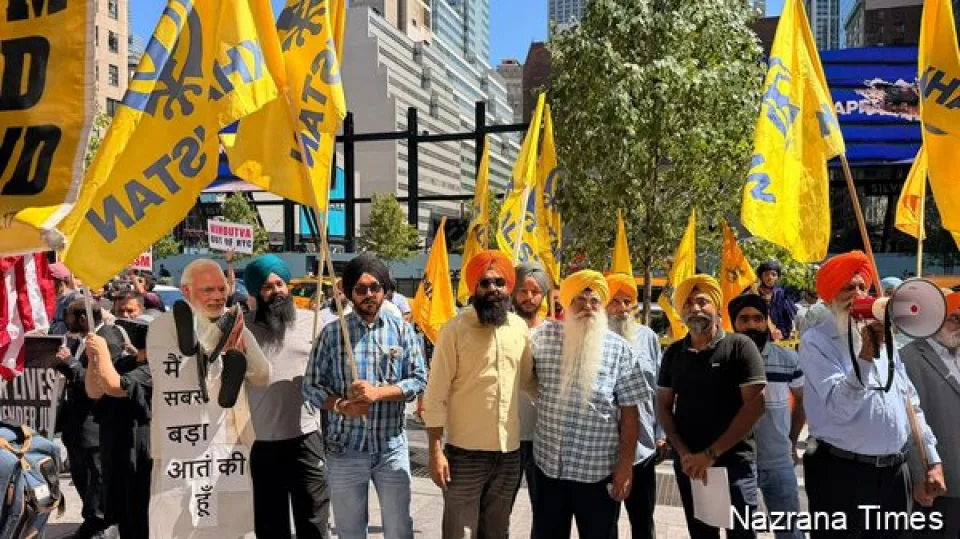
Manhattan echoes with pro-Khalistan slogans as Sikh demonstrators arrive from several US states; Sikh Coordination Committee says America has no place for hatred or anti-minority ideology
NEW YORK, August 29, 2026 — Nazrana Times
A large number of Sikhs gathered outside Madison Square Garden in Manhattan, New York, to stage a protest during an event attended by Rashtriya Swayamsevak Sangh (RSS) chief Mohan Bhagwat.
During the demonstration, protesters waved Khalistan flags and raised pro-Khalistan slogans, calling for the right of Punjab to self-determination and voicing support for an independent Khalistan.
The protest was called by the Sikh Coordination Committee East Coast and was joined by representatives and supporters of various Sikh, Panthic and human rights organisations, including Shiromani Akali Dal (Amritsar), American Gurdwara Parbandhak Committee, Sikhs for Justice, Baba Banda Singh Bahadur International Sikh Society, Khalistan Affairs Center, Council of Khalistan, Sikh Caucus Committee, Shaheed Kartar Singh Sarabha Sports Club, Gurdwara Sahib Sikh Cultural Society Richmond Hill, New York, Sikh Center of New York and the World Sikh Parliament.
Sikh leaders, youth, activists and members of the community travelled to New York from New Jersey, Connecticut, Pennsylvania, Maryland, Virginia, Indiana and the Boston area, among other places. Organisers described the gathering as a demonstration of the Sikh diaspora’s organised and collective voice.
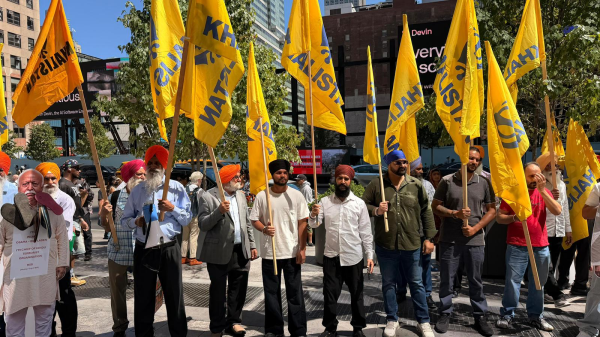
Speakers at the protest addressed issues including the ideology of the RSS, the situation of minorities in India, Sikh human rights, Punjab’s political future and the right to self-determination.
They said the United States was founded on principles of religious freedom and freedom of expression and maintained that any ideology they considered hostile towards minorities would be opposed through peaceful and democratic means.
Referring to the United States as the “Land of the Free, Home of the Brave,” the Sikh Coordination Committee said there should be no place in the country for hatred or ideology directed against minority communities.
“Punjab Should Have the Right to Decide Its Political Future”
Himmat Singh, coordinator of the Sikh Coordination Committee, said the people of Punjab should have the right to determine their own political future.
“Punjab’s independence is the path to safeguarding our national existence, identity and the future of generations to come. The Sikh community will continue to raise its voice for self-determination and independence peacefully on democratic platforms around the world,” he said.
Himmat Singh also alleged that jailed Indian gangster Lawrence Bishnoi and networks associated with him were being used, through what he claimed was collusion involving the Indian central government and the RSS, to carry out violent activities targeting members of the Sikh diaspora abroad.
These allegations have not been independently established in this report.
He called for an independent and transparent international investigation into such allegations and urged governments to ensure the safety of Sikhs living overseas.
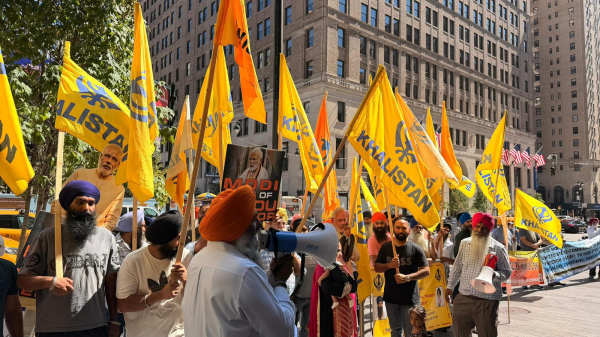
Call to Raise Sikh Human Rights Issues Internationally
Dr Amarjit Singh said issues concerning Sikh self-determination and human rights needed to be raised more effectively at the international level.
He argued that rather than suppressing the political aspirations and voices of a community, they should be heard and addressed through democratic means.
Harjinder Singh, media spokesperson for the Sikh Coordination Committee East Coast, said the peaceful demonstration outside Madison Square Garden sent a clear message that the Sikh diaspora would continue to speak about what it sees as its human, religious and political rights.
“Today’s peaceful protest outside Madison Square Garden sends a clear message that the Sikh diaspora will not remain silent about its human, religious and political rights,” he said.
“We will continue to raise our voice through legal and peaceful means in the United States and other democratic countries, and we will continue to bring concerns about alleged transnational repression targeting Sikhs to the attention of relevant governments and human rights organisations.”
Among those who attended or addressed the gathering were Surjit Singh Kallar, Dr Bakhshish Singh, Balwinder Singh Chatha, Santokh Singh Indiana, Harminder Singh Ahluwalia, Balaka Singh, Jagpreet Singh Jag Baba, Joga Singh New Jersey and Rajinder Singh.
Young Sikh leaders, including Japneet Singh and Gurpartap Singh, along with a number of other Sikh youths, also participated and shared their views.
Speakers emphasised the need to raise issues concerning Sikh rights, human rights and self-determination more prominently at the international level.
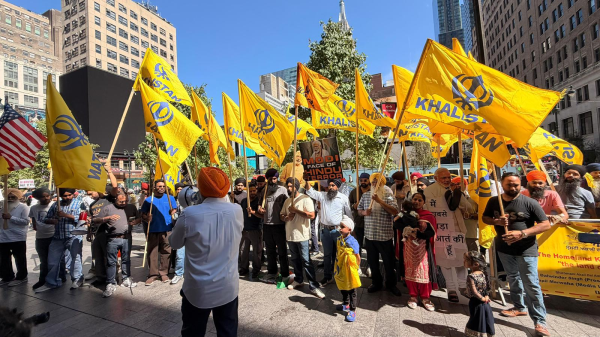
Sikh Coordination Committee Thanks Participants
The Sikh Coordination Committee said the demonstration outside Madison Square Garden provided the Sikh community with an opportunity to present its views before the international community through peaceful and democratic means.
The committee said it plans to strengthen cooperation with other religious and human rights organisations in the future to advocate for minority rights, religious freedom and human rights.
At the conclusion of the protest, the Sikh Coordination Committee East Coast thanked Gurdwara management committees, Panthic organisations, Sikh youth, human rights activists and members of the Sikh community who travelled from different areas and states to participate.
The committee said the unity and large participation shown by the community had strengthened what it described as the Sikh community’s collective voice.






Leave a Reply