Pakistan–Iran Border Trade Remains Suspended as Asim Munir Holds Talks in Tehran
- Internationl
- (Asia/Kolkata)
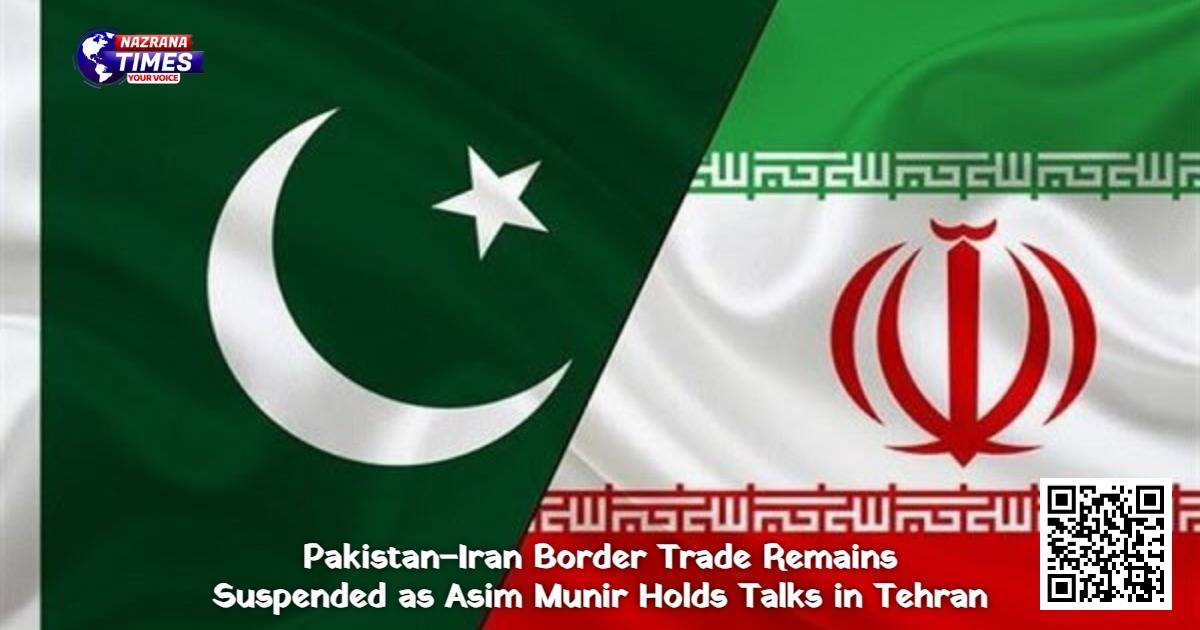
ISLAMABAD/TEHRAN, October 20: Commercial trade between Pakistan and Iran remained suspended at two key border crossings in Balochistan on Tuesday, disrupting freight movement and raising concerns over supplies of liquefied petroleum gas (LPG) and other essential commodities.
Commercial operations at the Gabd–Rimdan and Taftan crossings were halted over the weekend. Passenger movement at Gabd–Rimdan has reportedly continued, but authorities have not announced a reopening date for commercial traffic.
Munir Holds Talks in Tehran
The disruption comes as Field Marshal Syed Asim Munir, Pakistan’s chief of defence forces and army chief, visits Tehran for discussions with Iranian officials amid regional tensions and stalled diplomatic efforts involving Iran and the United States.
Iranian Foreign Ministry spokesman Esmaeil Baghaei said the talks were primarily focused on bilateral relations and strengthening cooperation. Pakistan has also continued its diplomatic engagement on regional issues.
Authorities Offer Differing Explanations
Pakistani provincial authorities have described the suspension as a temporary measure to address security concerns, prevent smuggling and improve border management.
Bakhtiar Ismail, deputy commissioner of Chagai district, said the Taftan crossing would reopen once effective arrangements were in place. Iran, meanwhile, has attributed the disruption to technical issues and precautionary measures.
The differing explanations have left traders uncertain about when commercial operations will resume.
Import Documentation Exemption Withdrawn
The suspension has coincided with Pakistan’s Ministry of Commerce withdrawing an earlier order extending an exemption from the Electronic Import Form requirement for goods imported from Iran. An October 16 memorandum withdrew the previous order with immediate effect.
The regulatory change could complicate import procedures. However, no publicly established evidence confirms that withdrawing the exemption alone caused the border suspension or that the decision was directly linked to pressure from international creditors.
Chamber Estimates Around 2,000 Trucks Affected
The Quetta Chamber of Commerce and Industry has advised businesses involved in Pakistan–Iran trade to suspend new import and export orders until further notice. It has also highlighted the financial risks facing traders as shipments remain delayed.
Trade representatives have reported that vehicles carrying LPG, rice, fresh fruit and other commodities are stranded on both sides of the border. The chamber estimates that around 2,000 trucks are affected, although the precise number and volume of cargo awaiting clearance have not been independently established.
LPG Supply and Transport Costs Raise Concerns
Gabd–Rimdan has become an important route for LPG supplies from Iran. Industry representatives have warned that prolonged restrictions could increase supply pressures and transport costs, particularly in areas dependent on cross-border deliveries.
The actual impact on retail prices and the duration of any shortages remain uncertain. Domestic distribution costs, alternative supplies and wider market conditions could also influence prices.
Pakistan and Iran have long sought to expand bilateral trade, but international sanctions affecting financial transactions, limited banking channels and recurring border disruptions continue to present challenges.
Traders are awaiting clarification on border procedures and the resumption of commercial traffic. As of Tuesday, no confirmed timetable had been announced for reopening either crossing to trade.