
Unprecedented Monsoon Floods Ravage Punjab, Expose Pakistan’s Climate Risks
- Internationl
- (Asia/Kolkata)
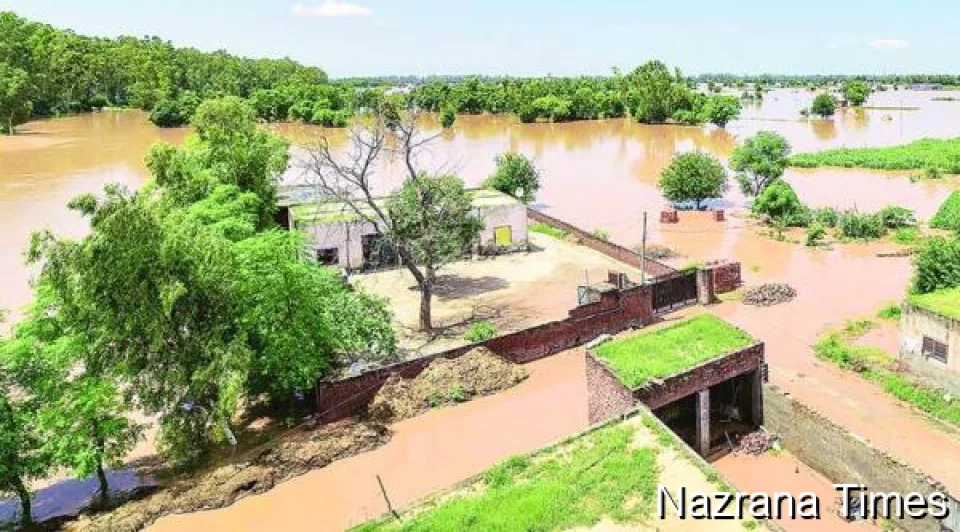
Catastrophic Floods Submerge Punjab, Expose Pakistan’s Climate Fragility
Lahore (Nazrana Times) Ali Imran Chattha
Pakistan is reeling from a severe humanitarian crisis as unprecedented monsoon floods have devastated Punjab, leaving hundreds dead and displacing hundreds of thousands in a powerful reminder of the country’s vulnerability to climate change.
The disaster, which began in June, escalated sharply in late August 2025 after relentless rains combined with water releases from dams in Indian-administered Kashmir caused the Chenab, Ravi, and Sutlej rivers to overflow. More than 1,400 villages have been inundated, submerging farmland, sweeping away homes, and destroying livestock.

Rescue and Relief Efforts
The government has launched a large-scale rescue operation, with the armed forces leading evacuations in eight districts including Lahore, Sialkot, and Faisalabad. Using boats and helicopters, soldiers have ferried stranded residents to safety while delivering food, tents, and medicines.
Emergency responders such as Rescue 1122 have played a critical role. Near Chichawatni, a man trapped in a tree for hours was dramatically pulled to safety — symbolizing the dire conditions faced by countless others.
Human and Economic Toll
The nationwide death toll has surpassed 800, with fears the figure will rise as waters recede and access to cut-off areas improves. Economic losses are staggering: cotton and rice crops, vital to Pakistan’s exports, have been devastated, while livestock losses threaten both food security and rural livelihoods.
Sialkot has recorded its heaviest rainfall in nearly five decades, crippling infrastructure and worsening the crisis.

Health Emergency Declared
As waters begin to withdraw from upper Punjab, the provincial government has declared a health emergency. Hospitals are bracing for outbreaks of cholera, typhoid, and hepatitis, with relief camps reporting a surge in patients.
A “very high” flood warning has been issued for early September, especially for downstream Sutlej regions near Sulemanki and Islam headworks, where fresh surges are feared.
Climate Justice and Long-Term Response
The disaster has once again highlighted the issue of climate justice. Pakistan contributes less than 1% to global greenhouse gas emissions, yet remains among the countries most vulnerable to climate-induced catastrophes.
Prime Minister Shehbaz Sharif has directed officials to accelerate relief efforts and ensure aid reaches the most vulnerable. Proposals for long-term resilience include small dams, reforestation campaigns, and enhanced flood management systems.
For displaced families, the road to recovery will be long. But with combined efforts from government agencies, the military, and local communities, there is a glimmer of hope amid unprecedented devastation.







Leave a Reply