
Study Circles Strengthen Quranic Learning and Dawah: Dr. Humaira Tariq
- Internationl
- (Asia/Kolkata)
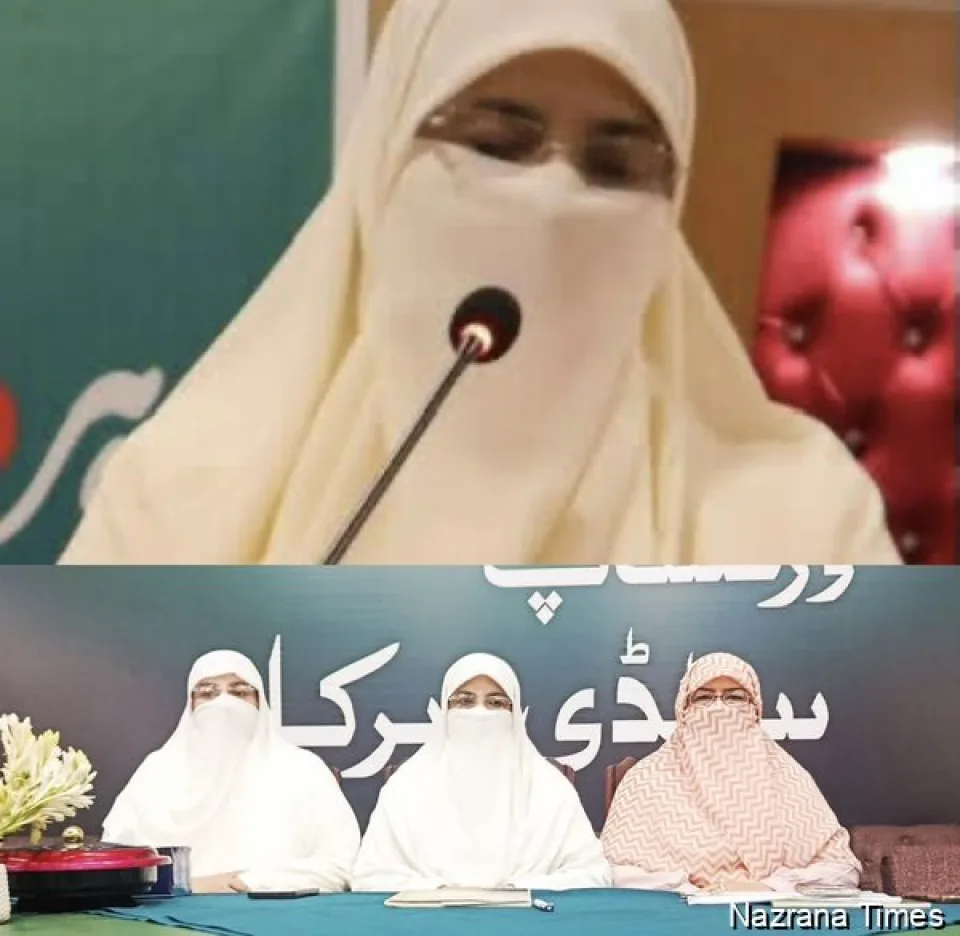
Collective study is a strong foundation for knowledge, awareness, and Dawah; study circles are an effective means for Quranic understanding and change in practical life – Dr. Humaira Tariq
Lahore (Nazrana Times) Ali Imran Chattha
Dr. Humaira Tariq, Secretary General of the Women's Wing of Jamaat-e-Islami Pakistan, stated while addressing a study circle workshop held at Mansoora Auditorium that study circles are not merely academic sessions, but effective training grounds for Quranic comprehension, intellectual training, character building, collective awareness, and calling towards the faith (Dawah). She said that if study is coupled with the correct methodology and a collective environment, the learning process becomes more effective, sustainable, and fruitful.
Dr. Humaira Tariq said that group study instills confidence, enthusiasm, and consistency in individuals, while a difficult task undertaken alone becomes easier when approached collectively. Citing the example of the holy month of Ramadan, she remarked that just as worship feels easier in a collective atmosphere, collective study also makes the journey of learning more pleasant.
Dr. Humaira Tariq noted that there are successful examples of collective study worldwide, where large research materials are divided among participants and disseminated to the entire team in a short time and this is the true power of collective strength. She said that a major reason for the low completion rate of free online courses is isolation, whereas in a group setting, both interest and completion rates increase significantly.
She emphasized that study circles are not just a means of acquiring knowledge but also the foundation for strong relationships, cooperation, Dawah opportunities, and collective progress. According to her, collectivity is indispensable for understanding Allah's religion, acting upon it, and establishing it in society.
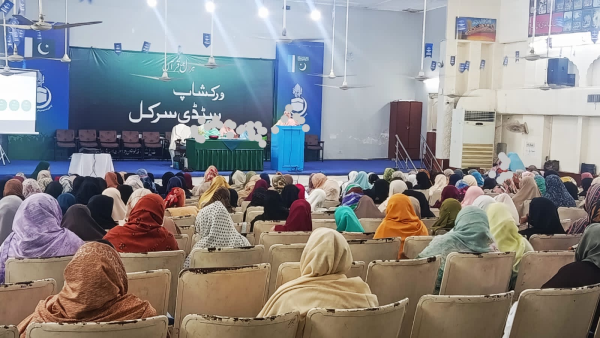
Citing the effective study method SQ3R as the basis for study circles, Dr. Humaira Tariq stated that the five stages .Survey, Question, Read, Recite, and Review . strengthen the learning process. She added that asking questions is a sign of intelligence, and the best environment is one where every participant feels free to ask questions and every sister actively takes part in the learning process.
Later, Aneela Mahmood, Director of the "Har Dil Quran" (Every Heart Quran) project, spoke on the "Objectives of the Daura-e-Quran" (Quran Course). She stated that the primary objective of the Daura-e-Quran is to understand the true purpose behind the revelation of the Holy Quran and to seek guidance from the Quran in every sphere of life. She said that increasing Quranic understanding, implementing Quranic teachings in practical life, training for collective discipline, building Dawah capacity, and character building are the core goals of this program.
Aneela Mahmood informed that the Daura-e-Quran has been structured as a comprehensive two-hour curriculum comprising four practical stages, which include recitation with conversational translation, thematic discussion, practical feedback, and a future action plan ensuring that the message of the Quran is not only understood but also implemented in daily life.
At the end of the workshop, the Nazima (President) of the Lahore Circle addressed all the participants and emphasized that they should incorporate the guidance provided in the workshop, modern study methods, practical principles of study circles, and preparation for the Daura-e-Quran into their organizational and Dawah activities. She stated that regular preparation, practical practice, collective study, and continuous guidance are essential for achieving the best results.
Members and aspiring candidates from across the Lahore Circle participated in large numbers in the workshop and received practical guidance on making study circles more effective, active, and productive.






Leave a Reply