
Ashura Observed with Devotion Across Pakistan; No Untoward Incident Reported
- Internationl
- (Asia/Kolkata)

By Ali Imran Chattha | Nazrana Times
Lahore — 26 June 2026
Millions of mourners across Pakistan observed Youm-e-Ashura, the 10th of Muharram 1448 AH, with profound reverence and grief on Friday, commemorating the martyrdom of Hazrat Imam Hussain (RA) — grandson of the Holy Prophet Muhammad (PBUH) — along with 72 family members and companions, at the plains of Karbala more than 1,400 years ago. In a testament to the nation's collective discipline and the extensive security arrangements put in place by federal and provincial authorities, all processions concluded peacefully across every province, including Gilgit-Baltistan and Azad Kashmir, with no untoward incident reported from any corner of the country.
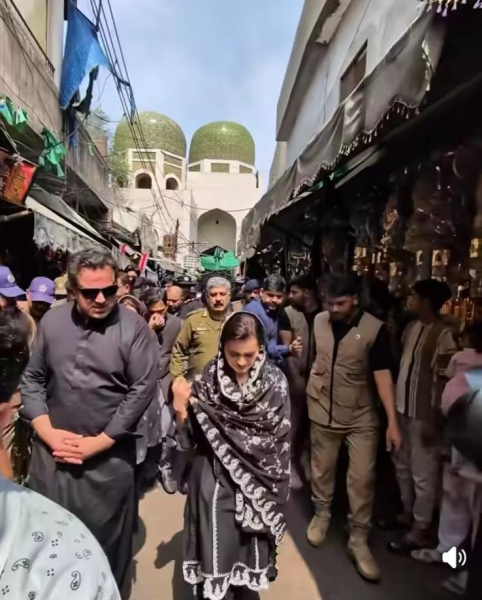
Nationwide, a total of 4,836 processions and 5,480 majalis were held across the country, with 1,301 areas declared highly sensitive by the Ministry of Interior. Provincial governments, in full coordination with law enforcement agencies, implemented foolproof security measures, while medical camps and sabeels (water stalls) were set up along all major procession routes to facilitate mourners.
Following the directives of Interior Minister Mohsin Naqvi, a central monitoring cell in Islamabad maintained continuous contact with provincial governments' control rooms for real-time information exchange, with the Interior Minister, Minister of State Talal Chaudhry, and Secretary Interior Khurram Agha monitoring the situation moment by moment.
Leadership Calls for Unity and Reflection
The occasion drew solemn messages from the country's highest offices. Prime Minister Shehbaz Sharif described Ashura as a day offering timeless lessons in faith, patience, sacrifice, truth, and social reform, urging the nation to promote unity, tolerance, inter-sect harmony, and mutual respect. He called upon religious scholars, spiritual leaders, the media, and the youth to spread the true message of Karbala. President Asif Ali Zardari, in his message, said the tragedy of Karbala remains a timeless lesson demonstrating that truth, justice, integrity, and human dignity must never be compromised, and appealed to citizens to promote peace, inter-sect harmony, and brotherhood while avoiding rumours and provocative behaviour.
Provincial Highlights
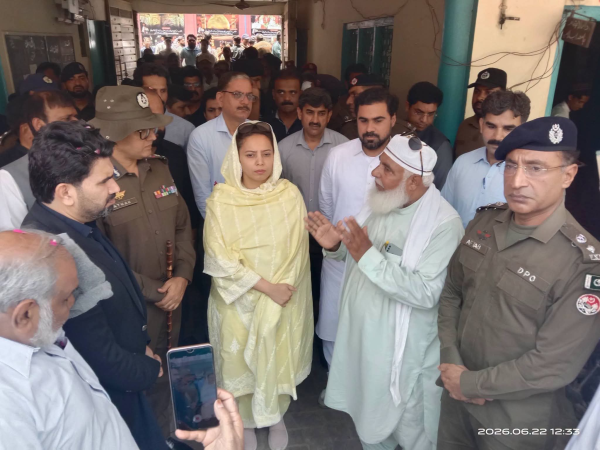
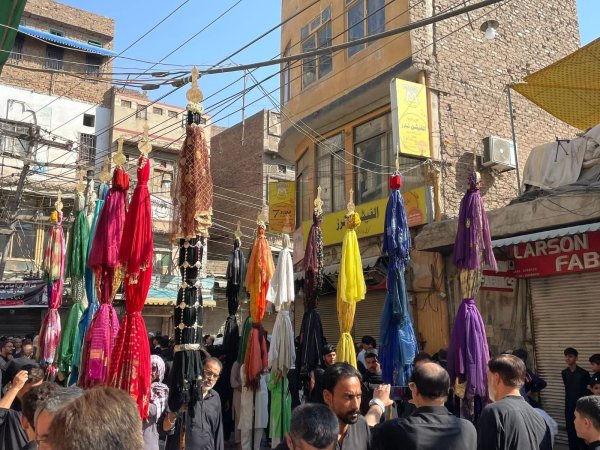
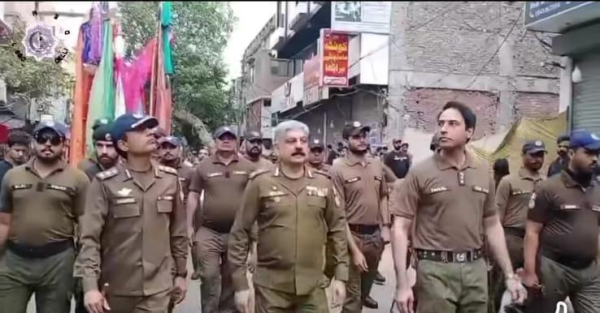
Punjab: In Lahore, the central procession — featuring the symbolic Zuljanah — commenced from Nisar Haveli, passing through Mohalla Shian where the Azan-e-Ali Akbar was performed, before culminating at Karbala Gamay Shah, drawing tens of thousands of participants. Over 20,000 police personnel were deployed across the provincial capital, supported by a three-tier security ring, drones, and Safe City cameras. In Rawalpindi, the main procession moved from Imambargah Aashiq Hussain, Teli Mohallah, to Imambargah Qadeemi, with four separate processions merging along the route from Imambargah Hifazat Ali Shah, Imambargah Shaheedan-e-Karbala, Imambargah Shah Chan Chiragh, and Imambargah Yaadgar-e-Hussain, all guarded by 5,500 police officers alongside Army and Rangers contingents. As a precautionary security measure, mobile phone services were partially suspended in 24 Punjab districts — including Rawalpindi, Faisalabad, Multan, and Dera Ghazi Khan — at procession routes and majalis venues until 10:00 PM. Lahore and the remaining districts maintained uninterrupted mobile connectivity throughout the day. Punjab hosted 2,502 majalis and 3,025 processions on Ashura.
Sindh: Karachi's flagship procession departed from Nishtar Park at approximately 9:30 AM and concluded at Imambargah Hussainia Iraniyan in Kharadar after traversing its traditional route. Sindh Chief Minister Murad Ali Shah personally joined a mourning procession, with 60,000 police and Rangers personnel deployed for security across the province, where more than 1,600 processions are observed during Muharram. Snipers were positioned on rooftops along the route, and bomb disposal squads carried out thorough clearance operations. The province observed 1,040 majalis and 1,039 processions on the day.
Khyber Pakhtunkhwa: In Peshawar, the first procession departed from Imambargah Agha Syed Ali Shah, with 12 additional mourning processions held throughout the day under stringent security. Authorities requisitioned 61 companies of the Pakistan Army and 76 companies of Rangers to support arrangements, while more than 30,000 trained volunteers assisted law enforcement agencies. Advanced surveillance infrastructure was deployed across the province, including AI-based monitoring systems, body-worn cameras, geo-tagged video monitoring, more than 5,600 CCTV cameras, and over 1,000 4G event cameras at sensitive locations. A dedicated digital surveillance wall enabled round-the-clock monitoring of processions and majalis. Out of 614 imambargahs in the province, 127 were declared highly sensitive, 262 sensitive, and 225 normal.
Ashura Observed with Devotion Across Pakistan; No Untoward Incident ReportedBalochistan: Quetta's central procession was taken out from Imambargah Hussaini Sadat on Alamdar Road in the morning, continuing until after Maghrib prayers. The procession included 35 groups carrying the symbolic Zuljanah, standards, and tazias, while volunteers established water distribution points, refreshment stalls, and emergency assistance camps along the route. The procession was escorted by 4,800 police personnel with an additional 4,000 deployed in surrounding areas, backed by full route scanning and aerial surveillance.
Islamabad: In the capital, 12 processions and 54 majalis were held on Ashura. Inspector General of Police Syed Ali Nasir Rizvi personally conducted field visits to key procession sites in I-10, F-11, and Jhungi Syedan. A combined deployment of 16,000 personnel from the Islamabad Police, Rangers, Frontier Constabulary, and Special Branch blanketed the city, with Armoured Personnel Carriers stationed at critical junctions. Over 57 security checkpoints were established, with lady police officers deployed for women's security checks. All activities were monitored through Safe City surveillance, body-worn cameras, and drones.
Azad Kashmir: Processions and majalis were held in Muzaffarabad and other cities, following their traditional routes peacefully under local administration supervision, with 47 majalis and 41 processions observed across the territory.
Gilgit-Baltistan: Gilgit-Baltistan held 1,070 majalis and 141 processions, with events in Gilgit and Skardu conducted under heavy police and Rangers cover and round-the-clock CCTV monitoring.
Foolproof Security Framework
The security plan was implemented against a backdrop of persistent threats from banned militant groups and specific intelligence warnings received by law enforcement agencies ahead of the day. All procession routes were sealed with shipping containers and participants underwent thorough body searches. Snipers were stationed on high-rise buildings, while aerial surveillance using helicopters, advanced CCTV networks, and Safe City camera systems provided real-time monitoring. Anti-drone systems and mobile jammers were deployed at sensitive locations. Bomb disposal units and sniffer dogs swept imambargahs, majalis, and procession routes in advance, while personnel in plain clothes were positioned at sensitive venues and places of worship. Restrictions on motorcycle pillion riding were also enforced in various parts of the country as an additional precautionary measure.
Facilities for Mourners
Provincial governments set up medical camps, chilled water stalls, and beverage distribution points along all major routes. In Rawalpindi, Rescue 1122 positioned 57 ambulances, while 537 beds were reserved across government and private hospitals for emergency cases. Local communities additionally set up distribution points providing niaz — including food, milk, soft drinks, and water — to participants throughout the day. Following the conclusion of processions, Sham-e-Ghariban gatherings were held across the country, during which scholars recounted the events that followed the tragedy of Karbala, bringing the day's solemn commemorations to a close.
The peaceful conclusion of Ashura across Pakistan underscores the successful coordination between the federal government, civil administration, security forces, and the public — reaffirming the nation's enduring commitment to unity, inter-sect harmony, and religious solemnity.






Leave a Reply