
Pakistan Reels from Monsoon Devastation: Ravi River Floods in Punjab, Flash Floods Hit KPK
- Internationl
- (Asia/Kolkata)
Lahore, August 26, 2025 (Ali Imran Chattha):
Pakistan is facing a catastrophic monsoon season, with over 900 fatalities, thousands injured, and millions displaced. The crisis has hit hardest in Punjab, where the Ravi River has caused widespread flooding, followed by Khyber Pakhtunkhwa (KPK), where flash floods have destroyed communities.
Ravi River Crisis in Punjab
Eastern Punjab is witnessing its worst flooding in decades. The Ravi River, swollen due to continuous rainfall and India’s release of water from the Thein Dam and Madhopur Headworks, has breached protective dykes. Water inflows at Jassar have reached 111,000 cusecs, with forecasts predicting a surge to 200,000 cusecs. The Sutlej and Chenab rivers are also at dangerous levels (280,000 and 600,000 cusecs, respectively), threatening the Marala, Khanki, and Qadirabad barrages.
Over 50 villages including Jag Chak, Qila Qamar Singh, and Jattan Dawara have been submerged. Farmlands in Kasur, Bahawalnagar, and Nankana Sahib are underwater, destroying crops and livestock crucial for local livelihoods. Authorities have evacuated more than 150,000 residents to temporary shelters, though displaced families face shortages of food and clean water.
“We’ve lost everything—our homes, our fields, our animals,” said Ayesha Bibi, a farmer from Okara.
India’s water release, described as a “humanitarian measure” for dam safety, has sparked controversy amid stalled Indus Waters Treaty negotiations. Pakistani officials have urged renewed dialogue to prevent such releases from worsening humanitarian crises.

Flash Flood Havoc in KPK
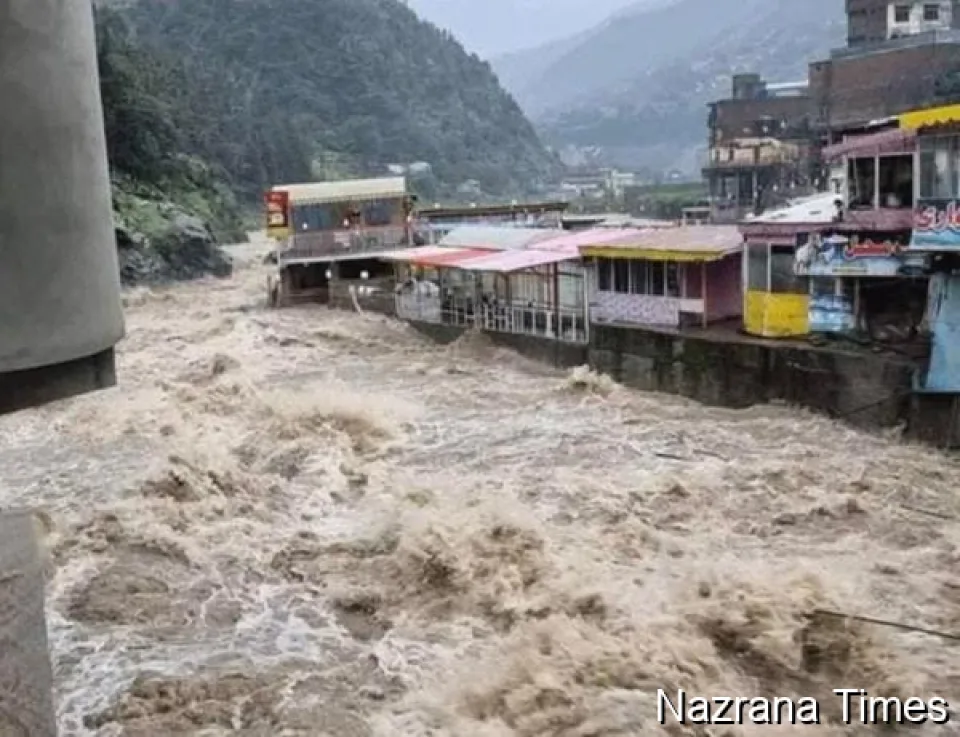
In KPK, relentless cloudbursts have triggered flash floods, devastating Buner, Swat, Shangla, and Abbottabad. Over 400 deaths have been reported, including 21 children, and more than 100 people remain missing. In Buner alone, a single-day deluge claimed 150 lives and wiped out entire villages.
The floods have destroyed 2,113 homes, 266 schools, and critical infrastructure, leaving thousands without electricity or clean water. Relief efforts were further hampered by a rescue helicopter crash that killed five crew members.
Experts warn that deforestation and fragile mountainous terrain, worsened by climate change, have amplified the destruction. Glacial Lake Outburst Floods (GLOFs) in northern KPK and Gilgit-Baltistan present additional risks.
National and International Response
The federal government has declared emergencies across affected districts, with the Army and Frontier Corps leading rescue and relief operations. Prime Minister Shehbaz Sharif visited flood-hit areas and pledged compensation within six days. Opposition leaders, including Bilawal Bhutto Zardari and Barrister Gohar, have also visited relief camps. Provincial Disaster Management Authorities (PDMAs) are monitoring river levels and weather patterns around the clock.
Internationally, the United Nations has allocated $600,000 in emergency aid, while Iran has offered humanitarian support. Private charities and companies are mobilizing donation drives, including through digital and cryptocurrency platforms.

A Climate Wake-Up Call
Pakistan, responsible for less than 1% of global emissions, remains highly vulnerable to climate change. The 2022 super floods and this year’s disaster highlight the urgent need for reforestation, flood-resilient infrastructure, and early warning systems. Experts also emphasize the importance of regional water diplomacy to manage cross-border river flows.
As the Ravi River continues to surge and KPK braces for more rainfall, the nation’s resilience is under severe test. The coming weeks will be critical for relief efforts and rebuilding devastated communities.







Leave a Reply