
Pakistan Intensifies Diplomatic Role as US-Iran Agreement Hangs in the Balance
- Internationl
- (Asia/Kolkata)
Pakistan Intensifies Diplomatic Role as US-Iran Agreement Hangs in the Balance
Ali Imran Chatha
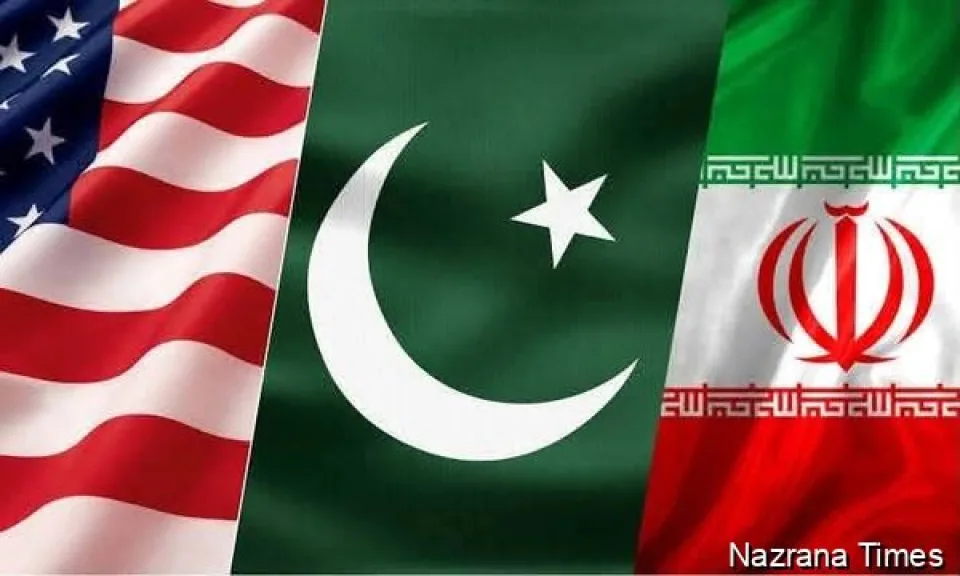
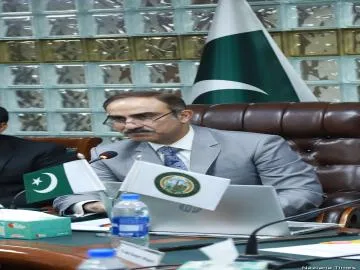
Islamabad/Tehran: Pakistan's diplomatic engagement in the protracted and perilous standoff between the United States and Iran has entered a new and arguably most consequential phase, as Interior Minister Mohsin Naqvi embarked on yet another visit to Tehran on Wednesday his second within days underscoring Islamabad's unwavering determination to prevent the fragile ceasefire from unravelling and to revive momentum toward a lasting settlement.
Minister Naqvi's latest departure for Tehran marks another high-level visit within a short span of time, reflecting sustained and intensive contact between Islamabad and the Iranian leadership. Discussions are expected to focus on matters related to the US-Iran dialogue and broader regional diplomatic coordination. The visit, confirmed by Pakistani official sources, comes amid growing anxiety that the window for a negotiated agreement may be narrowing rapidly.
Pakistan is scrambling to keep channels of diplomacy open between Washington and Tehran amid escalating rhetoric from both sides, and growing signals from Washington that it is prepared to restart attacks that have been on pause since an April 8 ceasefire.
The Road to This Moment: From Conflict to Ceasefire
To understand the gravity of Pakistan's current engagement, one must trace the arc of events that brought the region to this precipice. The ceasefire that created the current fragile opening followed weeks of escalating hostilities sparked by the assassination of Iran's Supreme Leader Ayatollah Ali Khamenei on February 28, which triggered US and Israeli strikes on Iranian territory and subsequent Iranian retaliation across the region.
It was in this crucible of crisis that Pakistan stepped forward. On 8 April, Prime Minister Muhammad Shahbaz Sharif announced that the United States and Iran had agreed to a conditional two-week ceasefire, during which talks would be held on a lasting agreement. The announcement carried a historic distinction: President Trump and Iran's foreign ministry both named Prime Minister Sharif and Pakistani Army Chief Field Marshal Asim Munir in their ceasefire announcements a rare concurrence that no other country enjoyed, reflecting the equal trust both parties had placed in Islamabad.
The Islamabad Talks: A Promising Beginning That Fell Short
The Islamabad Talks were held at the Islamabad Serena Hotel on 11 and 12 April 2026, aimed at stabilising the ceasefire and negotiating a potential resolution to the conflict. They were moderated by Pakistan, which had played a central role in brokering the ceasefire and facilitating dialogue. The talks lasted 21 hours and consisted of three rounds the first indirect, and the second and third direct.
The United States fielded a 300-member negotiating team led by Vice President JD Vance, who announced at a concluding press conference that the two sides had failed to reach an agreement. "The bad news is that we have not reached an agreement. And I think that's bad news for Iran much more than it's bad news for the US," Vance said before departing Islamabad. The teams were reportedly able to agree on the main points of a ten-point ceasefire framework, with the exception of two critical issues: the Strait of Hormuz and Iran's nuclear programme.
The Sticking Points: Nuclear Programme and Maritime Sovereignty
The core tensions that derailed the Islamabad Talks continue to define the diplomatic impasse. Pakistani officials had earlier delivered a 15-point proposal from the United States to Iran, which included an end to Iran's nuclear programme, limits on its ballistic missile capabilities, reopening of the Strait of Hormuz, restrictions on Iranian support for armed regional groups, and sanctions relief for Tehran in return. Iran rejected the proposal outright.
At the outset of the conflict, the United States had outlined four objectives: destroy Iran's ballistic missile capabilities, dismantle its navy, sever Tehran's support for armed proxies, and ensure Iran never obtained a nuclear weapon. Tehran has insisted that any settlement must begin with an immediate cessation of all hostilities and has maintained firm reservations over demands touching upon its nuclear sovereignty.
According to diplomatic sources, Iran recently conveyed its latest response to US proposals through Pakistan, reiterating its demand for an immediate end to hostilities while maintaining reservations regarding Washington's core demands over Tehran's nuclear programme.
Naqvi's Visits: The Human Face of Pakistan's Mediation
The central instrument of Pakistan's backchannel diplomacy has been Interior Minister Mohsin Naqvi, whose repeated high-level engagements in Tehran have drawn considerable attention from regional analysts and diplomatic observers. During his visit on May 16 and 17, Naqvi met Iranian President Masoud Pezeshkian, Interior Minister Eskandar Momeni, and Parliament Speaker Mohammad Bagher Ghalibaf who also serves as Iran's chief negotiator in the peace process.
The meeting with President Pezeshkian reportedly lasted approximately 90 minutes and covered issues of mutual and regional interest. Naqvi also held separate meetings with Iranian Foreign Minister Abbas Araghchi and Parliament Speaker Ghalibaf. During their meeting, Iranian Interior Minister Eskandar Momeni praised Field Marshal Asim Munir's diplomatic efforts to reduce tensions between Tehran and Washington an acknowledgement that underscored the personal credibility Pakistan's military leadership has cultivated with the Iranian side.
Trump Pauses Hormuz Escorts: A Signal of Flexibility?
In what has been interpreted as one of the most significant diplomatic gestures in recent weeks, Washington appeared to soften its posture following Pakistan's sustained intervention. The United States Navy had begun escorting commercial vessels through the Strait of Hormuz, but the operation was subsequently paused. President Trump announced the reversal, citing the request of Pakistan and other countries and describing "great progress" toward a "complete and final agreement" with Iran.
Prime Minister Shahbaz Sharif responded by stating that Pakistan was "very hopeful that the current momentum will lead to a lasting agreement that secures durable peace and stability for the region and beyond."
As of May 20, US forces have redirected 90 ships and disabled four vessels to enforce the maritime blockade against Iran. Meanwhile, a South Korean oil tanker safely transited the Strait of Hormuz the first passage by a South Korean vessel since the Iran war began signalling a cautious if partial return of commercial shipping to the vital waterway.
Pakistan Persists Despite Obstacles
The path of mediation has not been without turbulence. Pakistan's Foreign Office has acknowledged "obstacles" in its efforts, with spokesperson Tahir Andrabi commenting amid threats from President Trump to bomb Iran "back to the Stone Ages" if it refused to accept Washington's terms. Nevertheless, Islamabad reaffirmed its commitment to nudging both sides toward negotiations aimed at ending the conflict.
Pakistan and China had earlier co-authored a joint five-point initiative calling for an immediate ceasefire, urgent diplomatic engagement to prevent further escalation, and the restoration of normal maritime traffic through the Strait of Hormuz. The initiative was shared with Iran, the United States, and other stakeholders and received appreciation across the region.
PM Shahbaz and Field Marshal Munir: Architects of the Strategy
Prime Minister Shahbaz Sharif and Army Chief Field Marshal Asim Munir have personally overseen Pakistan's engagement in the diplomatic process a role acknowledged by both Washington and Tehran. Their personal credibility with both parties has been identified by analysts as the primary factor enabling Pakistan to serve as an effective bridge between two deeply antagonistic powers.
Pakistan's role has been described by analysts as that of a trusted backchannel facilitator, with issues including Strait of Hormuz navigation, nuclear and ballistic missile concerns, sanctions relief, and mechanisms to prevent future military escalation all forming part of the broader negotiating agenda.
Where Negotiations Stand Today
President Trump has stated publicly that Iran desires a deal "so badly" and has predicted the conflict would conclude "very quickly," while projecting a sharp decline in oil prices as a result of anticipated supply stabilisation. Iran's Foreign Minister Abbas Araghchi has, however, warned that should conflict resume, Tehran's response would carry "many more surprises," reflecting the continued fragility of the current standoff.
Both sides have reported that progress has been made but no final agreement has been reached. The nuclear issue has been described as the single most consequential unresolved matter, with Washington characterising Tehran as "unyielding" on the question, while Iranian officials have described a settlement as "just inches away" blaming the impasse on what they call maximalist demands from the US side.
Political analysts caution that despite repeated rounds of engagement and genuine diplomatic momentum, the most sensitive issues nuclear sovereignty, missile capabilities, and maritime rights remain unresolved and will require difficult concessions from both sides. Nevertheless, the frequency of Pakistan's high-level contacts with Tehran, the continued indirect exchange of proposals, and Washington's willingness to pause its Hormuz escort operations at Islamabad's request are being interpreted as signs that the momentum toward a potential agreement remains alive and that Pakistan's role at the centre of this diplomatic effort is more consequential now than at any previous point in this crisis.



Leave a Reply