
Pakistan’s Cnergyico Seeks Up to $300 Million in Foreign Financing for Refinery Upgrade
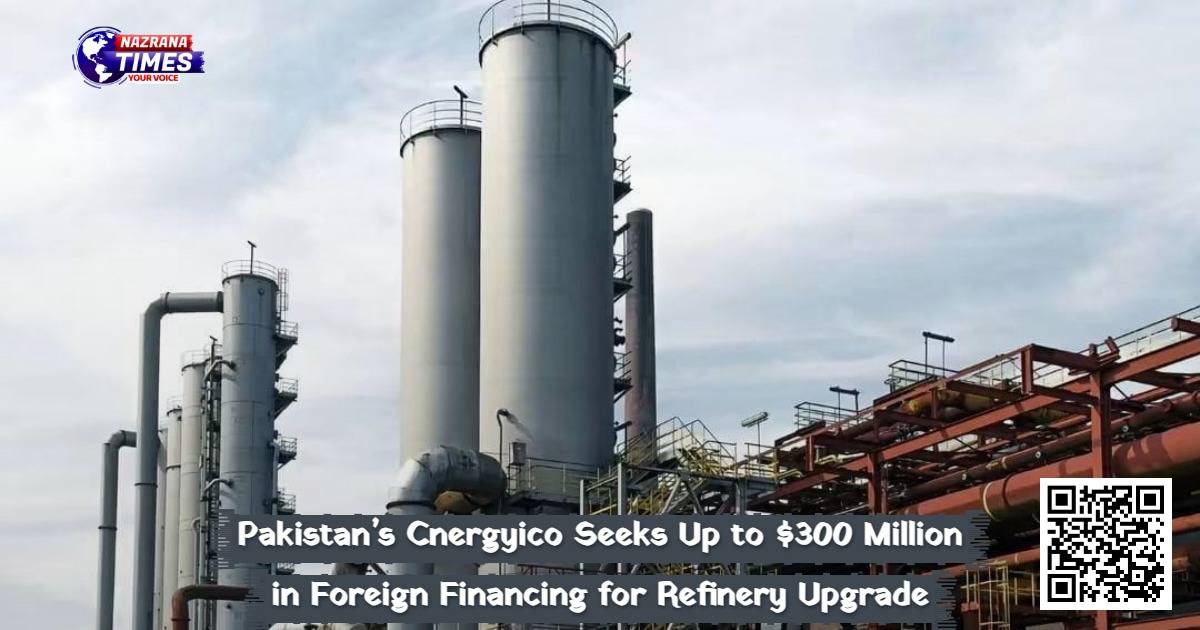
ISLAMABAD (Nazrana Times): Cnergyico PK Limited, Pakistan’s largest oil refiner, is seeking $150 million to $300 million in foreign project financing for a refinery modernisation programme estimated to cost $1.2 billion to $1.5 billion. The company is in talks with the US Export-Import Bank (EXIM), the US International Development Finance Corporation (DFC) and Middle Eastern lenders.
Under the $1.2 billion investment scenario, about $300 million is expected to come from customs duty incentives available under the government’s refinery policy. Project sponsors and lenders would provide the remaining $900 million.
Euro-V Petrol and Diesel in the First Phase
The upgrade will be carried out in three phases. The first will upgrade petrol and high-speed diesel (HSD) production to meet Euro-V specifications. The second will focus on converting fuel oil into other products, while the third will expand refining capacity and improve port facilities.
The project aims to produce higher-quality fuels, reduce fuel oil output and cut Pakistan’s reliance on imported petroleum products.
Cnergyico operates two refineries in Hub, Balochistan, with a combined crude processing capacity of up to 156,000 barrels per day. It also operates Pakistan’s first and only offshore single-point mooring (SPM) terminal and a retail network of more than 450 sites under the Byco brand. Management believes Cnergyico is further along in its upgrade than other domestic refineries.
Company Raises Concerns Over Petrol Pricing
Cnergyico estimates that, of the Rs49 per litre it would give up under the revised petrol pricing formula, Rs30 to Rs35 per litre would directly affect its profit and loss account. The company said refineries could be forced to process less crude if the formula remains in place.
The company has also diversified its crude supplies. In fiscal year 2026, it sourced 48% of its crude oil from the United States, a shift from its previous heavy reliance on Middle Eastern supplies.





Leave a Reply