
Zardari Calls for Stronger Pakistan-China Strategic and Economic Ties
- Internationl
- (Asia/Kolkata)
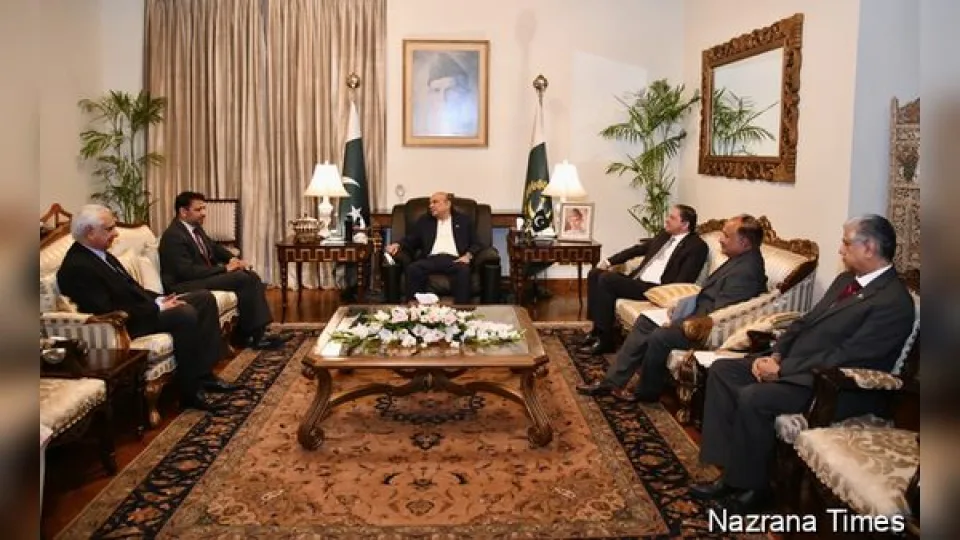
ISLAMABAD, September 15 (Nazrana Times): President Asif Ali Zardari has stressed that regular high-level exchanges, closer people-to-people contacts and broader economic cooperation are vital for maintaining and further strengthening the strategic trust between Pakistan and China.
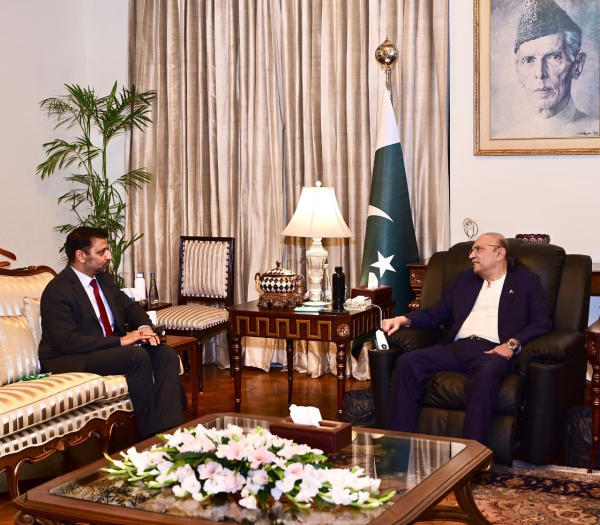
According to a statement issued by the Press Wing of the President’s Office on Tuesday, the president made the remarks during a meeting with Pakistan’s Ambassador-designate to China, Dr Syed Ali Asad Gilani, at Aiwan-e-Sadr. Senator Saleem Mandviwalla was also present.
President Zardari said Pakistan’s relationship with China remains a key pillar of the country’s foreign policy. He underlined the need to turn the strong political goodwill between the two countries into deeper economic and industrial cooperation.
Welcoming the growing focus on business-to-business engagement under CPEC 2.0, the president highlighted opportunities for cooperation in modern agriculture, artificial intelligence and emerging technologies.
He said greater collaboration in these sectors could help equip young people with new skills and create more employment opportunities.
President Zardari also directed the Ambassador-designate to maintain active engagement with Chinese government institutions, the leadership of the Communist Party of China, think tanks, educational institutions and the media.
He particularly emphasised strengthening people-to-people relations and expanding educational and student exchanges between Pakistan and China.
The president also said he looked forward to Chinese President Xi Jinping’s visit to Pakistan next year for the Shanghai Cooperation Organisation (SCO) summit




Leave a Reply